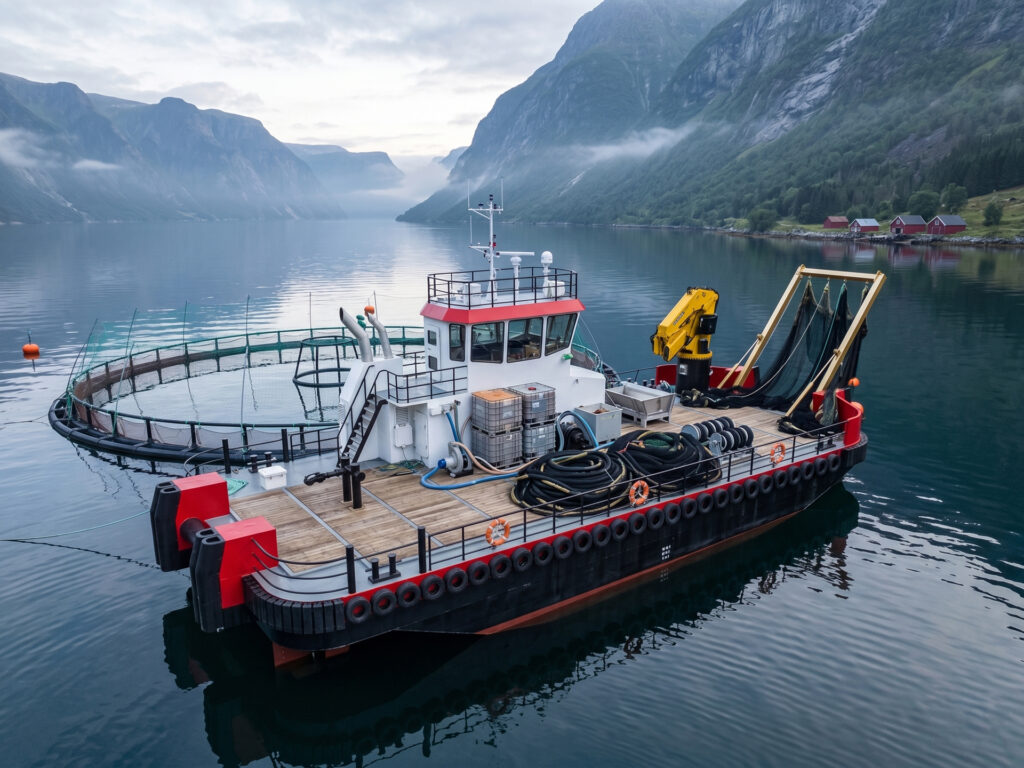
Hull material is one of the most consequential decisions in workboat procurement. It affects build cost, operational weight, maintenance requirements, repairability, and the vessel’s practical service life. There is no single correct answer — but for any given operational profile, one material is usually the better engineering choice.
This guide covers the three materials most commonly used in commercial service boat construction: steel, aluminium, and high-density polyethylene (HDPE). Each has a distinct set of properties, and each is best suited to a specific range of applications.
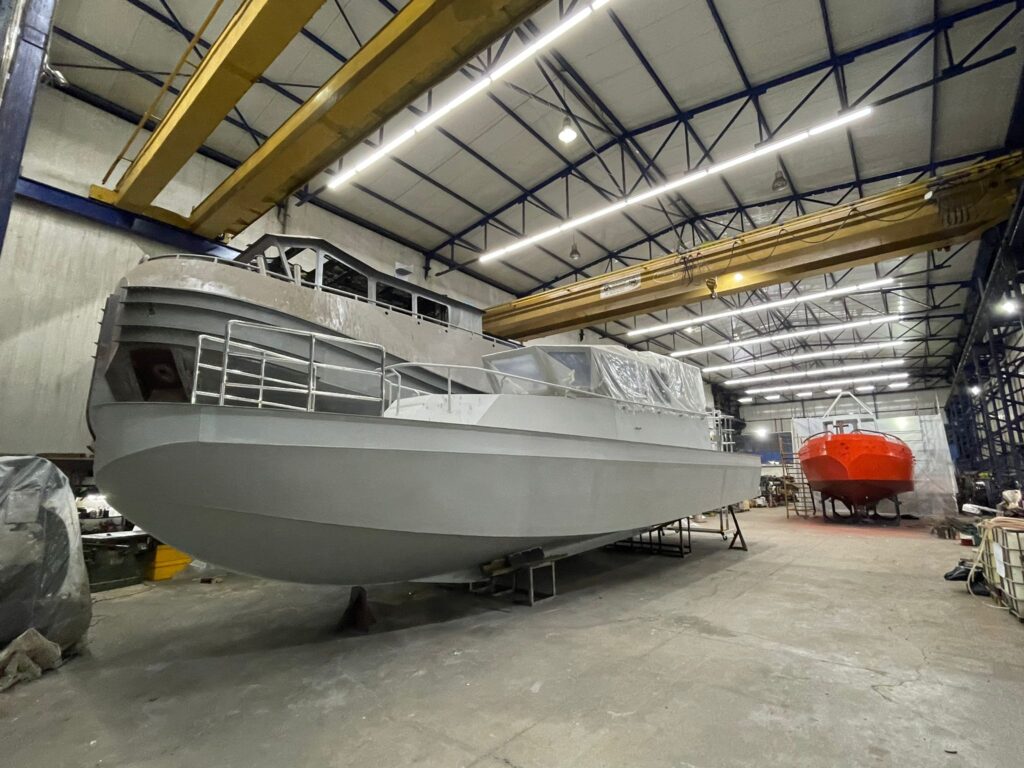
STEEL: STRENGTH, WEIGHT, AND LONGEVITY
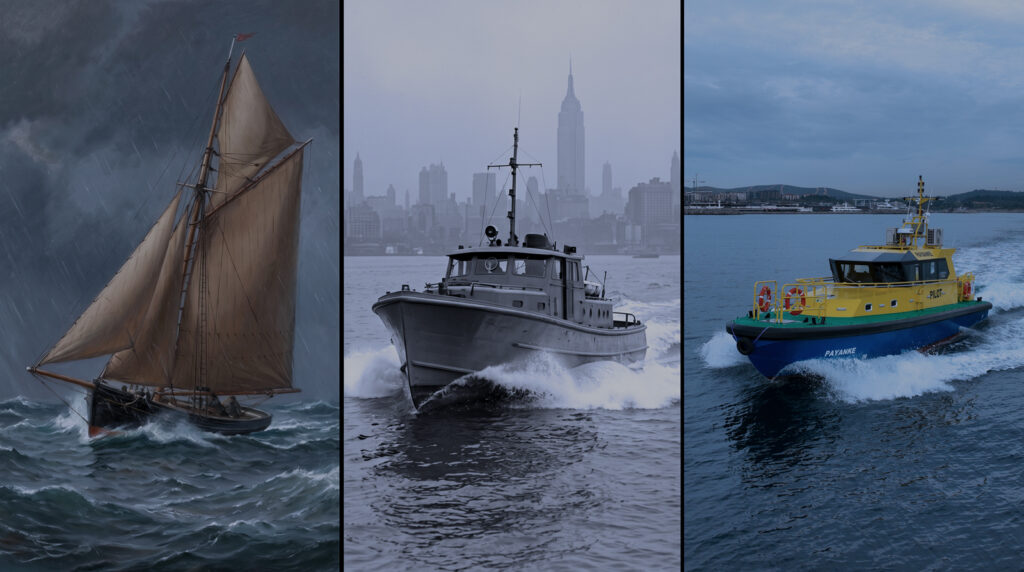
Steel is the oldest and most widely used hull material in commercial shipbuilding. Its properties are well understood, its fabrication is straightforward, and the global supply chain for steel plate, sections, and consumables is essentially universal.
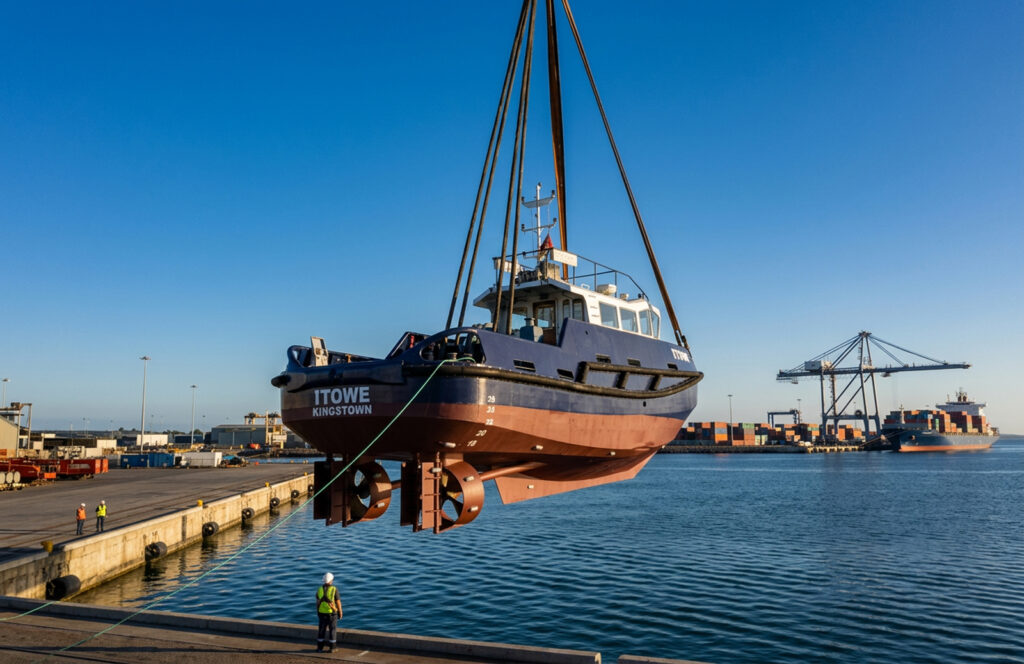
Structural strength. Steel offers the highest structural strength per unit cost of any hull material. For vessels that must absorb significant loads — tugs, anchor handling craft, offshore support vessels, heavy workboats — steel provides structural integrity that other materials cannot match at equivalent cost.
Repairability. A steel hull can be repaired by any competent welding shop worldwide. This is not a trivial consideration for operators running vessels in remote locations or developing-market ports where specialist facilities are unavailable.
Weight. Steel is heavy. A steel hull displaces more water than an equivalent aluminium or HDPE structure, which affects speed, fuel consumption, and payload capacity. For vessels where speed is a secondary requirement and load-carrying capacity or structural robustness is primary, this trade-off is acceptable.
Corrosion management. Steel corrodes in marine environments. Corrosion protection — coatings, anodes, and regular inspection — is an ongoing operational cost. Modern epoxy coating systems and cathodic protection manage this effectively, but they require consistent maintenance discipline. Neglected steel corrodes rapidly.
Best suited to: harbour tugs, anchor handling vessels, patrol craft requiring ballistic protection, heavy cargo workboats, vessels requiring significant structural modification over their service life.
ALUMINIUM: SPEED, WEIGHT REDUCTION, AND VERSATILITY
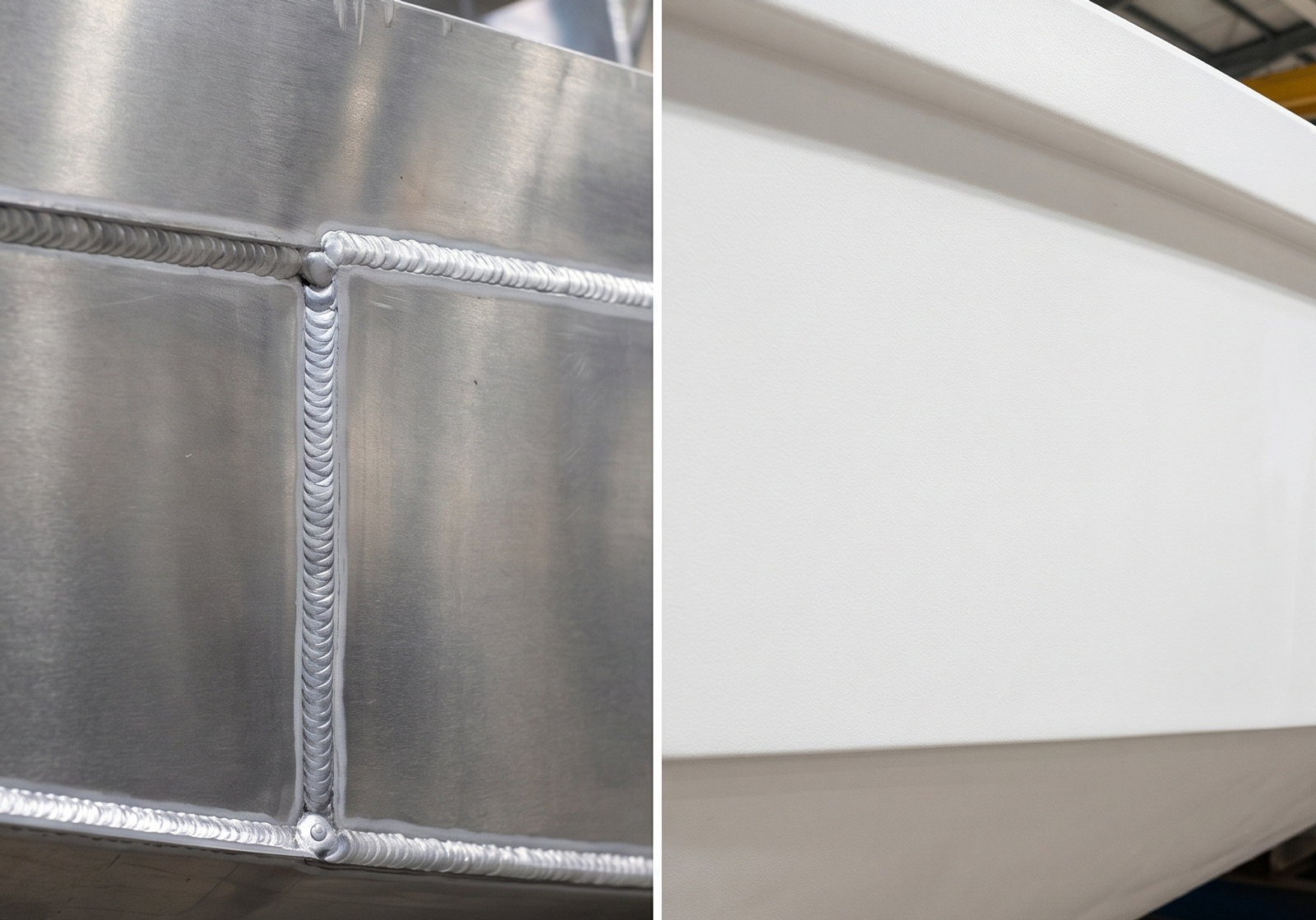
Marine-grade aluminium alloys — typically 5000 and 6000 series — have become the standard material for a wide range of commercial workboats where speed and weight reduction are operational priorities.
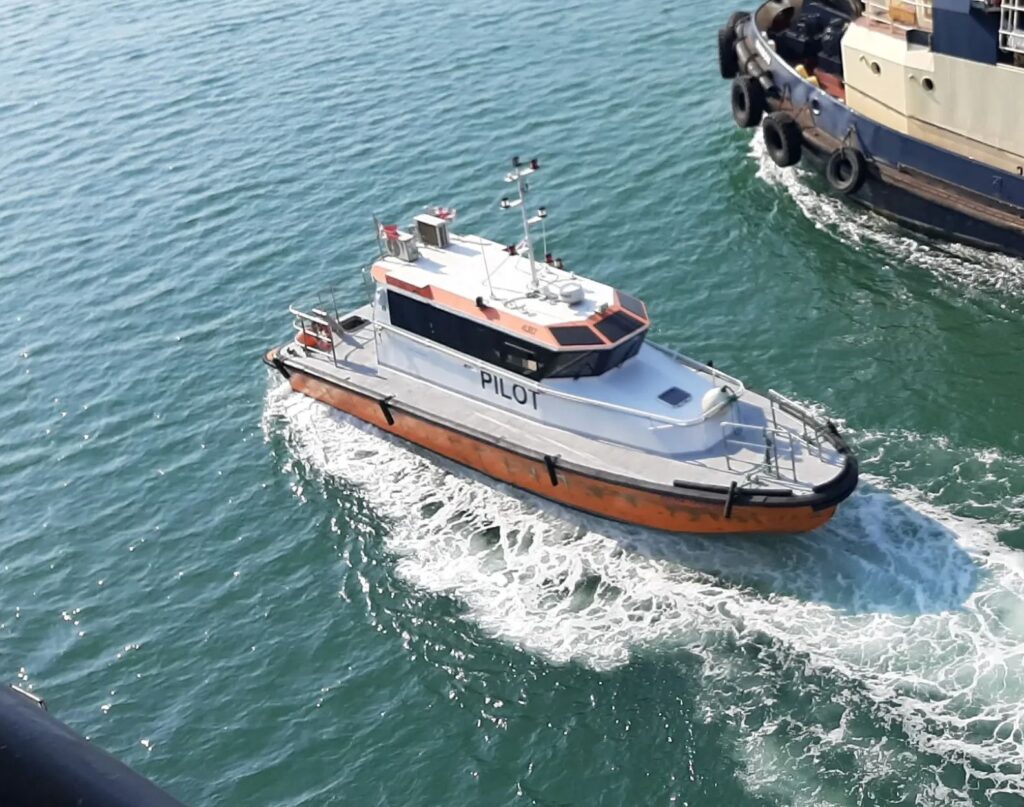
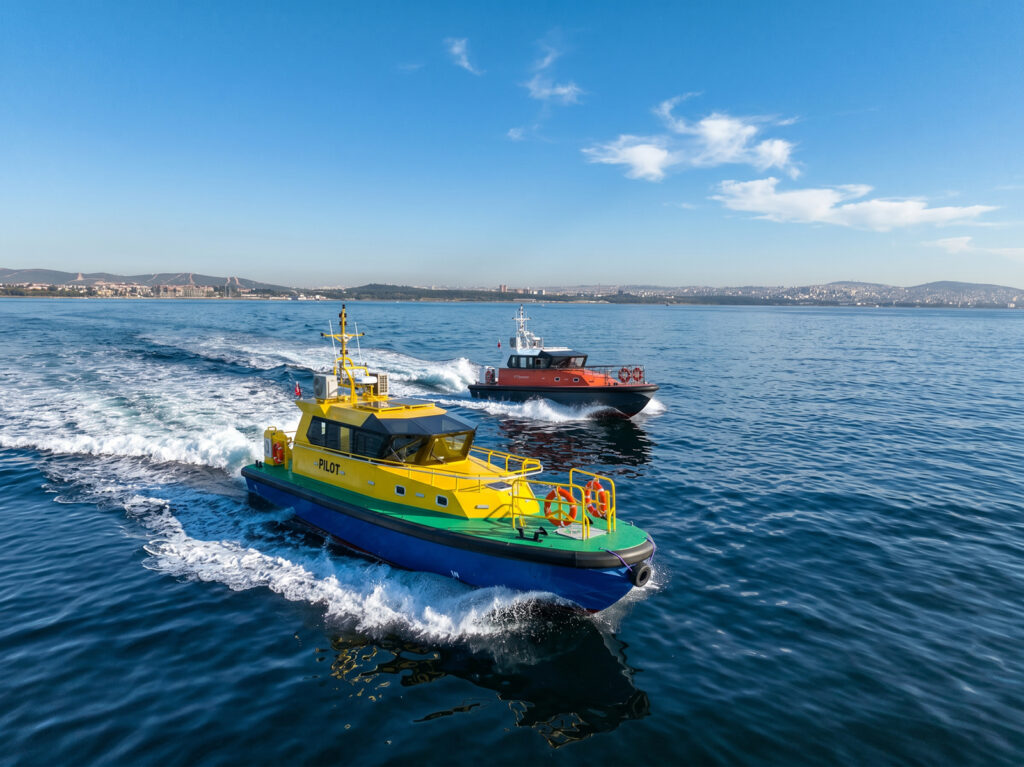
Weight advantage. An aluminium hull typically weighs 35–45% less than an equivalent steel structure. This weight saving translates directly into higher speeds at equivalent installed power, or equivalent speeds at lower installed power with corresponding fuel savings. For fast crew transfer vessels, pilot boats, patrol craft, and high-speed tenders, this is a decisive advantage.
Corrosion resistance. Marine aluminium alloys form a natural oxide layer that provides significant corrosion resistance without coatings. Aluminium does not rust. In salt-water environments, a well-maintained aluminium hull requires far less corrosion management than steel. However, galvanic corrosion where aluminium contacts dissimilar metals requires careful attention to design detail and fitting selection.
Fabrication. Aluminium fabrication requires skilled welders and appropriate equipment — it is more demanding than steel and less universally available for repairs. Welded aluminium structures can develop fatigue cracking in areas of high cyclic loading, which requires periodic inspection on high-speed craft.
Impact behaviour. Aluminium absorbs impact energy differently from steel. It deforms rather than fracturing, but significant impacts can cause permanent deformation that is more difficult to repair than equivalent steel damage.
Best suited to: pilot boats, fast crew transfer vessels, harbour patrol craft, superyacht tenders, fire-fighting vessels, fast response craft where speed and range are primary requirements.
HDPE: DURABILITY, SIMPLICITY, AND LOW MAINTENANCE
High-density polyethylene entered commercial marine construction as a niche material and has established a significant presence in specific workboat segments. Its properties address failure modes that both steel and aluminium are susceptible to.
Corrosion immunity. HDPE is chemically inert. It does not corrode, does not react to seawater, fuel, oil, biological growth, or most cleaning agents. There are no anodes, no coatings, and no corrosion surveys. For operators in chemically aggressive environments — aquaculture sites, waste management vessels, industrial port support craft — this is a meaningful practical advantage.
Impact tolerance. HDPE absorbs impact energy through deformation and recovery rather than permanent structural damage. Minor collisions with jetties, pilings, and other vessels — routine occurrences in working harbour environments — cause surface scuffing rather than structural compromise. A vessel that stays in service through routine dock impacts generates more revenue than one that requires regular hull repairs.
Weight. HDPE hulls are typically lighter than aluminium equivalents, offering fuel efficiency advantages at operational speeds.
Limitations. HDPE is not suited to vessels requiring high structural loads — large tugs, heavy offshore support craft, or vessels subject to significant dynamic loading. The material’s strength-to-weight ratio at structural scales does not compete with metal construction for demanding applications. Build complexity also limits HDPE to simpler hull forms; the material is typically rotationally moulded, which constrains geometry relative to welded metal construction.
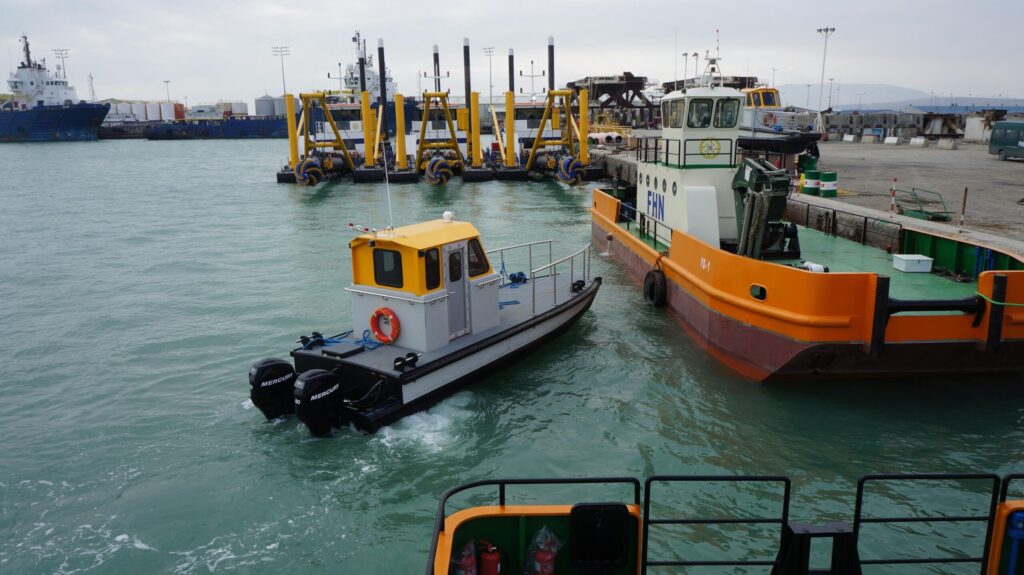
Best suited to: marina workboats, aquaculture support vessels, harbour patrol and line-handling craft, pollution response vessels, environmental monitoring craft, port utility boats where maintenance simplicity and corrosion resistance are primary requirements.
MAKING THE DECISION
The right material follows from the operational brief, not from preference or cost alone.
For maximum structural strength and repairability anywhere in the world: steel.
For speed, weight reduction, and versatility across a wide range of commercial roles: aluminium.
For corrosion immunity, impact tolerance, and minimum maintenance burden in specific operational profiles: HDPE.
Many operators default to aluminium because it covers a wide range of applications competently. That is reasonable. But for operators whose workboats spend their lives in conditions where corrosion is a constant challenge, or where hull impacts are genuinely routine, HDPE deserves serious evaluation. And for vessels where structural demands are the governing constraint, steel remains the engineering answer.
LOYD SHIPYARD’S APPROACH
Loyd Shipyard builds commercial workboats in all three materials. Our starting point is always the operational requirement — the environment the vessel will work in, the loads it will carry, the performance it needs to deliver, and the maintenance infrastructure available to the operator.
Material selection follows from that analysis. We do not default to one material across all builds, because the right answer varies with the brief.
If you are planning a workboat procurement and want to understand which material makes the most sense for your operational requirements, we are glad to work through it with you.
Contact Loyd Shipyard to discuss your vessel requirements.
Loyd Shipyard is based in Tuzla, Istanbul. We engineer and deliver purpose-built service boats and workboats in steel, aluminium, and HDPE for commercial maritime operations worldwide.