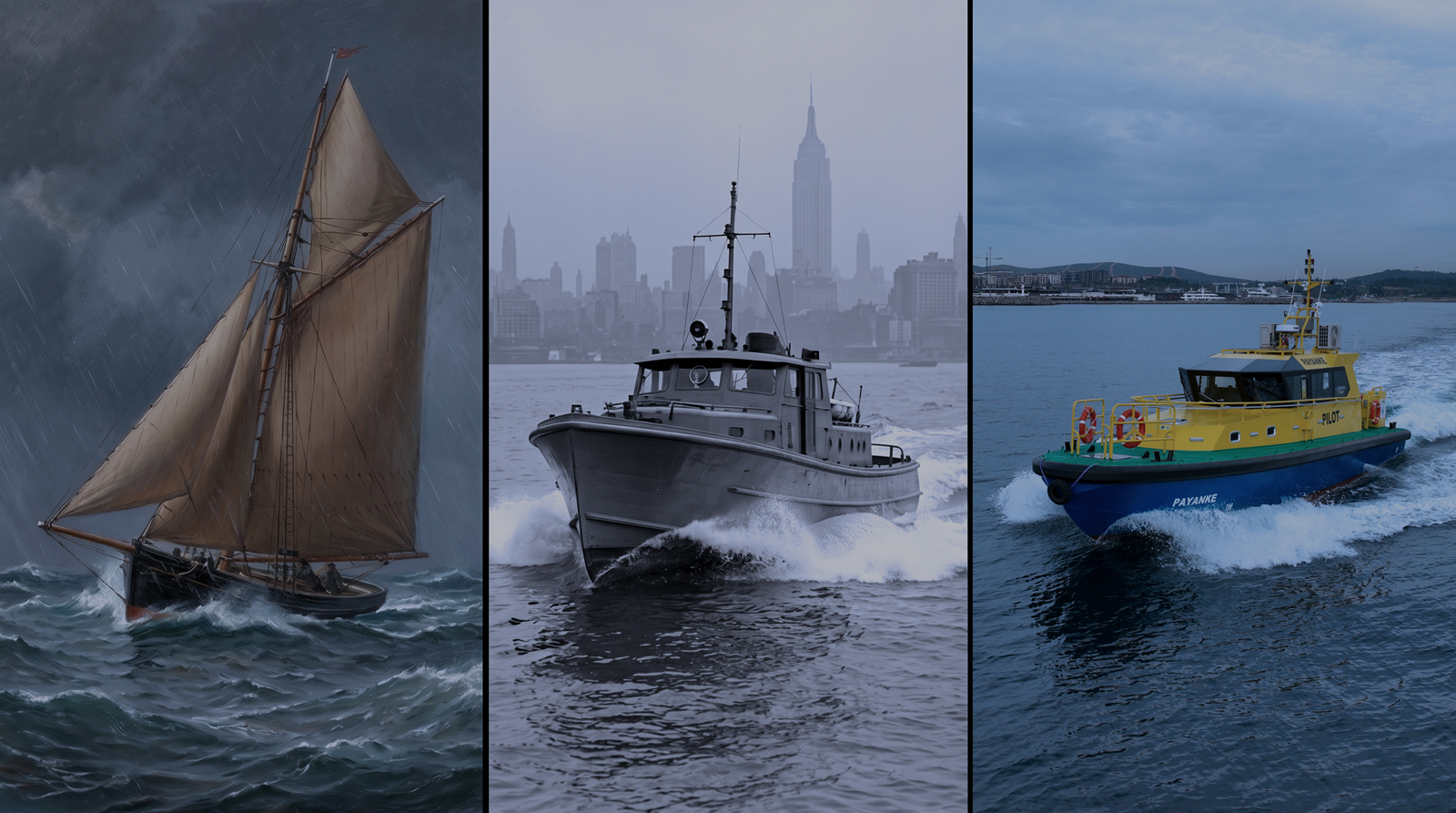
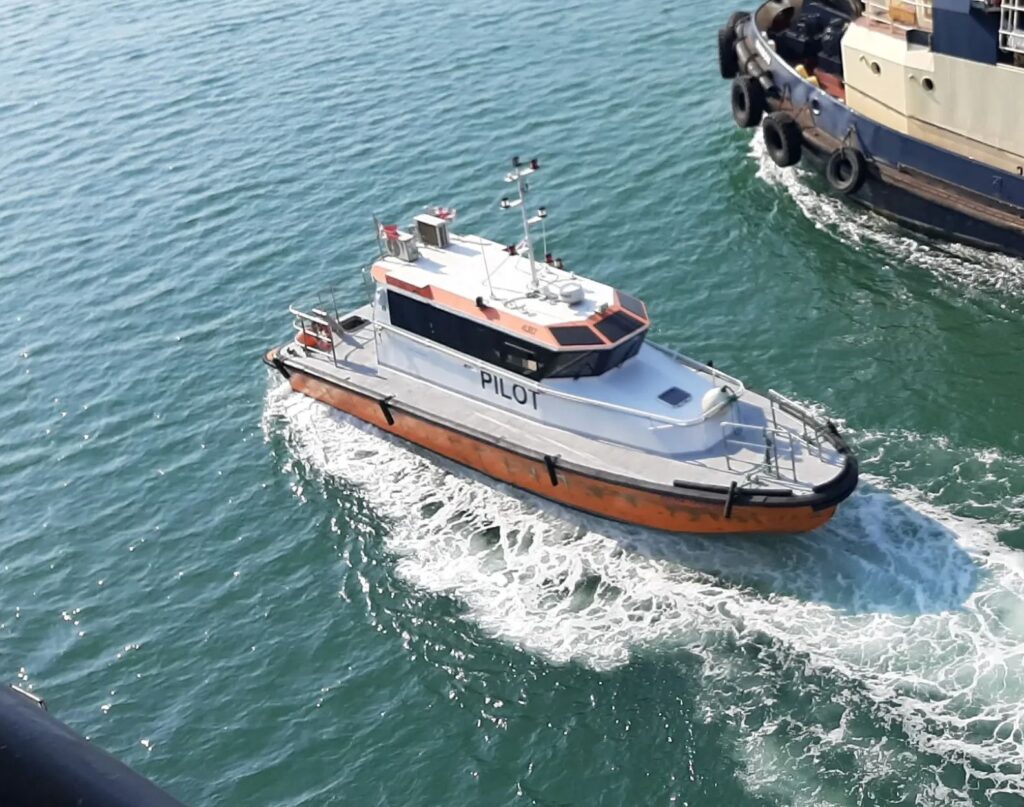
Every time a large vessel enters a port — from Rotterdam to Singapore, from Istanbul to New York — a small, fast boat races out to meet it. It carries one person: the harbour pilot, the local expert who will take command of the bridge and guide the ship safely to berth. That small, fast boat is the pilot boat. And its story is older, more dramatic, and more consequential to the history of naval architecture than almost anyone realises.
It Began Before Recorded History
The concept of the maritime pilot appears in some of the oldest texts in existence. In the sixth century BC, the Book of Ezekiel uses the word “pilot” — as the guide of a ship. Homer’s Iliad references “Thestor the pilot,” the man responsible for guiding the Achaean fleet to Troy. In ancient Rome, harbour authority inscriptions list the ship’s officers by rank, and among them is the gubernator — from the Greek kybernētēs, the helmsman who knew the local waters.
The practice was simple and universal: when a trading vessel arrived at an unfamiliar port, the captain hired a local — usually a fisherman who knew every sandbar, every current, every seasonal shift in the channel — to bring the ship in safely. At first, any small boat would do. A fishing skiff, a rowing gig, whatever was available. The vessel was secondary to the knowledge of the man aboard it.
That began to change in the 17th century, when European maritime trade exploded and port authorities across Britain, the Netherlands, and France began formally regulating pilotage through national legislation — the first “Pilotage Acts.” With regulation came competition. And competition, as it always does, changed the boat.
The Rule Was Simple: First Boat Wins
Here is the economic logic that drove pilot boat design for two centuries: in most ports, the first pilot boat to reach an inbound vessel got the contract. There were no reservations, no schedules, no assignments. You raced out, you got the job. Your competitor got nothing.
This single rule — first boat wins — transformed the pilot boat from a humble fishing skiff into one of the most technically refined sailing vessels ever built. The men who owned and operated pilot boats had a powerful financial incentive to build the fastest possible craft that could also survive whatever the open sea threw at it. Speed and seakeeping had to coexist. Neither quality alone was enough.
Nowhere was this competition more fierce than in the Bristol Channel on the west coast of England. The earliest records, held by the Bristol Museum and dated to 1795, list 12 registered pilot cutters with tonnages ranging from 14 to 24 tons. By the mid-19th century, the Bristol Channel pilot cutter had evolved into what many maritime historians consider the most successful fore-and-aft rigged sailing vessel of the entire age of sail — a deep-hulled, gaff-rigged cutter capable of exceeding 10 knots in strong winds, sailed by a crew of just two: a pilot and his apprentice. These were not racing yachts. They were working vessels that happened to be exceptional. The golden age of the Bristol pilot cutter lasted from approximately 1890 until the First World War. The very last one retired from service in 1922. Today, fewer than 18 original cutters are believed to survive.
The Designer Who Changed Everything
If Bristol Channel produced the finest sailing pilot cutters in Britain, New York harbour produced something even more consequential — a designer whose work with pilot boats permanently altered the course of naval architecture.
His name was George Steers, and he was 21 years old when he designed his first pilot boat in 1841. By the time he died in a carriage accident at 37, he had redesigned what a boat could be.
In mid-19th century New York, competition for pilotage contracts was relentless. The harbour was the busiest in the Western hemisphere. Dozens of pilot boats competed to reach incoming vessels first. Speed was everything. By the late 1840s, the most talented naval architects in America were competing to build the fastest pilot schooners ever seen.
In 1849, Steers presented a design for a pilot schooner called the Mary Taylor to Captain Richard Brown. Brown’s reaction was reportedly something close to alarm. The design violated almost every accepted principle of the era. At the time, fast boats were built with wide bows — the accepted wisdom held that a broad bow was necessary to prevent the vessel from plunging under the waves. Narrow bows were considered unstable and dangerous.
Steers reversed everything. He gave Mary Taylor a narrow, fine bow and placed the vessel’s greatest beam near its centre. The bow cut through water rather than pushing it aside. Drag dropped dramatically. The result was a vessel that was faster than any competitor of her size and handled rough open water better than boats with traditional wide bows. She was faster because she was smarter.
Mary Taylor’s design worked so well that Steers used it as the direct basis for his next commission — a racing yacht for the New York Yacht Club. That yacht was called America. In August 1851, America beat fifteen vessels of the Royal Yacht Squadron in a race around the Isle of Wight by 18 minutes. The trophy she won became the oldest international sporting trophy in history: the America’s Cup. The boat that started it all was a pilot boat.
From Sail to Steel to Aluminium
The transition from sail to steam in the late 19th century arrived slowly for pilot boats. Sail offered something steam engines initially could not match: reliability in the open sea without the need for fuel. But by the early 20th century, diesel-powered motor launches had replaced sailing cutters in most of the world’s major ports. The pilot cutter, with its deep hull and towering rig, gave way to the low-profile, twin-screw motor launch built for speed and manoeuvrability rather than endurance under sail.
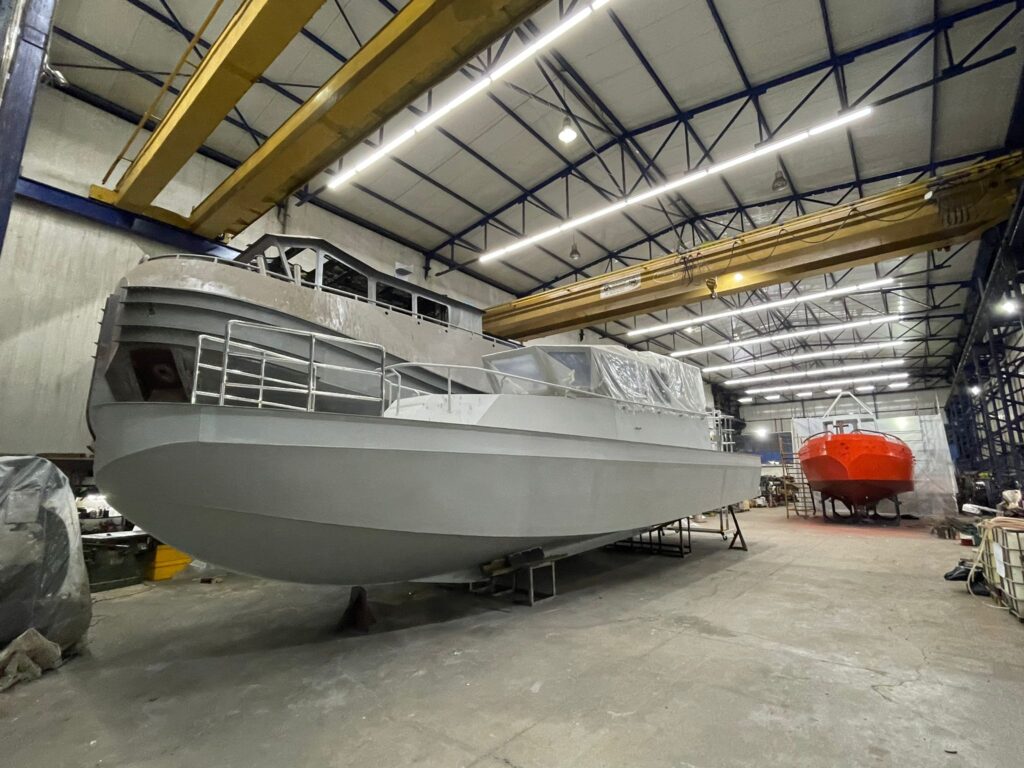
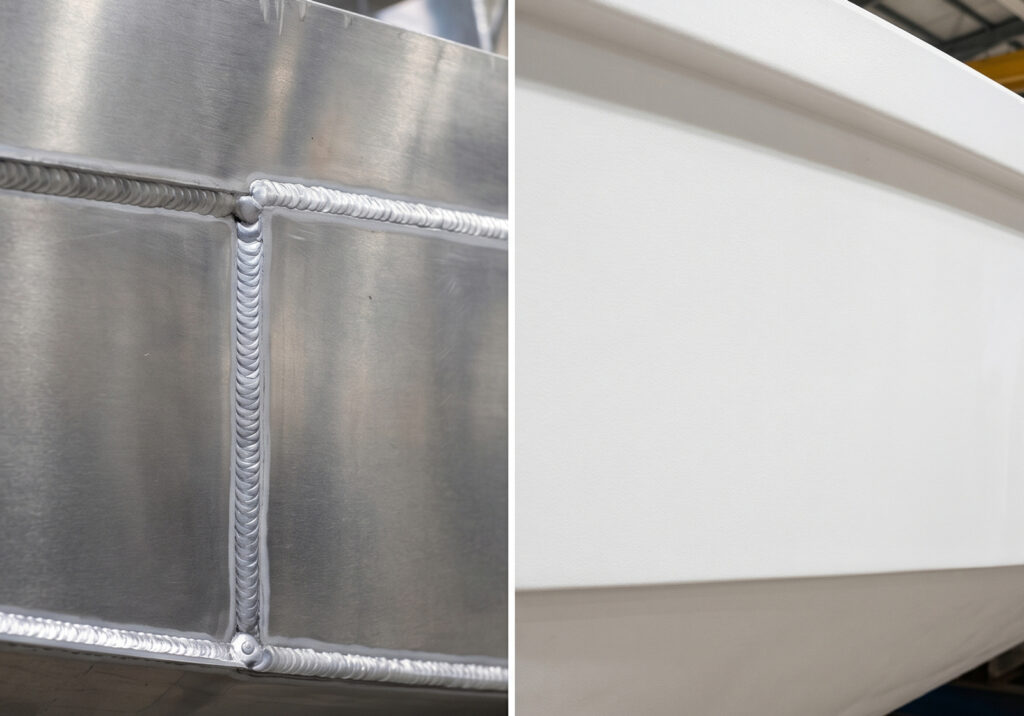
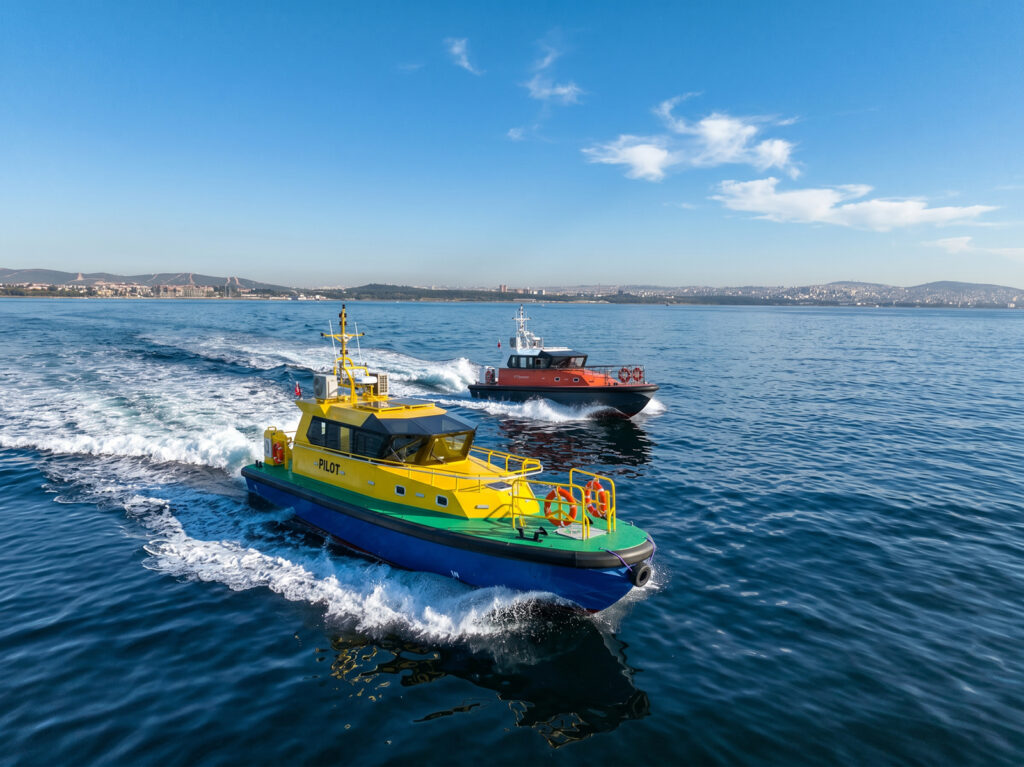
The next material revolution came in 1980, when American builder Gladding-Hearn delivered the first aluminium deep-V pilot boats for the Charleston Branch Pilots Association — twin-screw launches capable of 23.5 knots. Steel had been the standard; aluminium offered less weight, higher speed, and freedom from corrosion. Over the following four decades, more than 80 aluminium pilot boats of similar design were delivered to pilot organisations around the world. Today, the state of the art is a 25-to-30-knot aluminium hull with twin diesel drives, stabilised seating, self-righting capability, and fully enclosed bridge — able to operate in sea states that would have grounded the fastest Bristol Channel cutter ever built.
The Same Problem, Two Thousand Years Later
What is remarkable about the pilot boat’s history is not how much has changed — it is how little the fundamental requirement has evolved. Since a fisherman first rowed out to meet a Phoenician trading galley in an ancient Mediterranean harbour, the pilot boat has had one job: get there fast, whatever the weather, and bring the pilot safely alongside.
Every design evolution in those two thousand years — from the Bristol cutter’s gaff rig, to George Steers’ narrow entry, to the modern aluminium deep-V — has been a different answer to the same question. At Loyd Shipyard, it is a question we have been answering since 2001.